
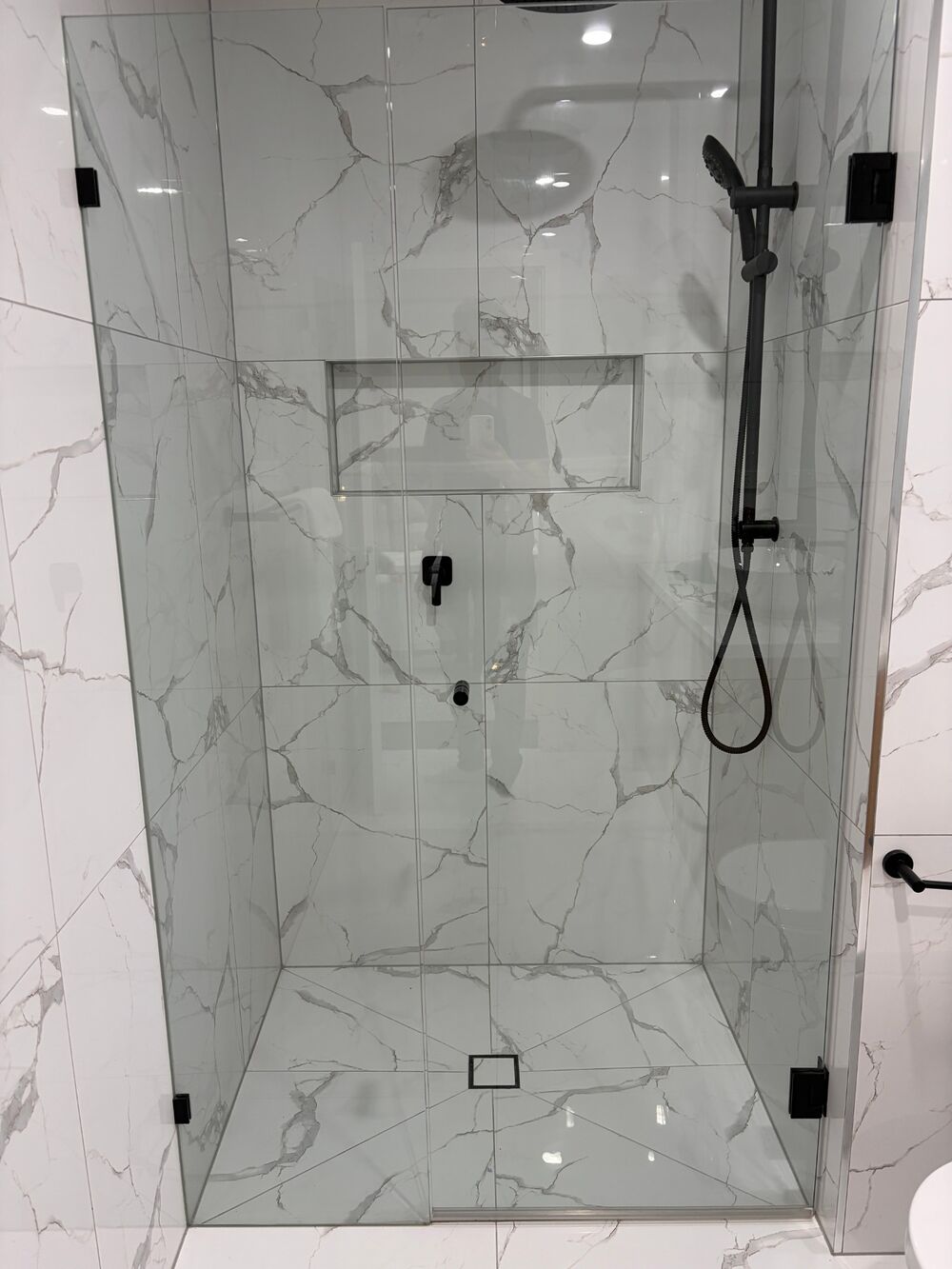
Waterproofing for showers, bathrooms, laundries and balconies, done properly before any tile goes down.
Shower bases screeded to fall towards the waste.
A continuous membrane, carried up the walls.
Careful attention at edges, corners and drains.
Tiled through to the final finish.
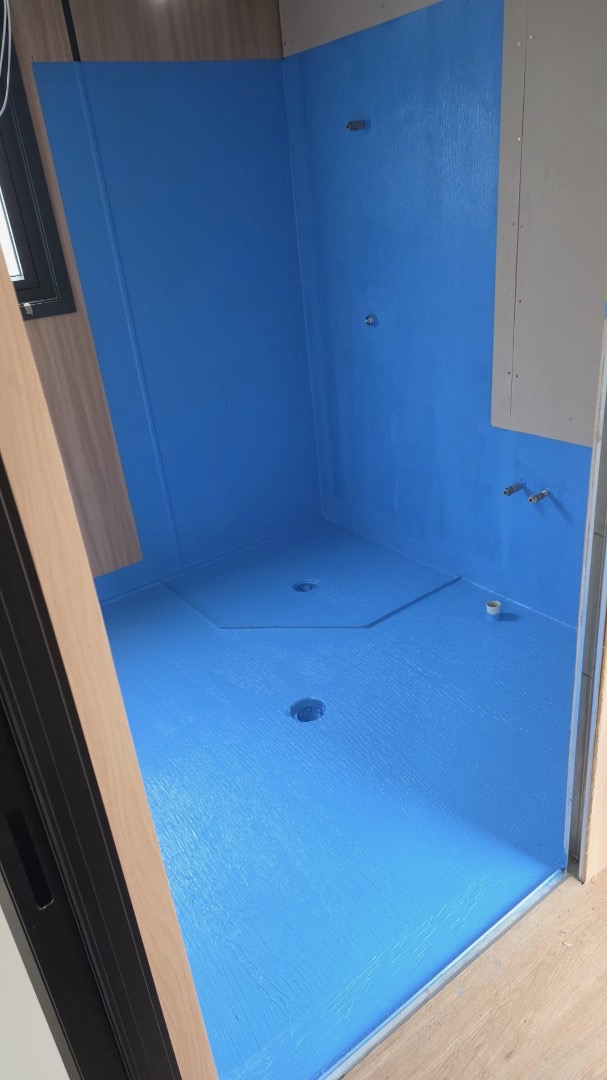
Elect Tiling & Waterproofing waterproofs showers, bathrooms, laundries and balconies across South East Melbourne from its base in Cranbourne East, and then tiles them, so the same team is responsible from the membrane to the final tile.
Waterproofing is the layer under every tile, and the one that matters most once the room is finished. We waterproof showers, bathrooms, laundries and balconies properly before any tile goes down, with careful attention around the edges, corners and drainage areas.
Shower bases are screeded to fall towards the waste first, then waterproofed and tiled, so water goes where it should.
A typical shower floor, in section. Six layers, and only the last two are ever seen.
Water finds the joins. These are the places a membrane has to be right.
Where floors meet walls, and where the shower meets the rest of the room.
Internal corners, hobs and niches, where the membrane has to stay continuous.
Around the floor waste, where every drop of water ends up.
In Australia, waterproofing in the wet areas of a home is covered by the National Construction Code (NCC), which points to the Australian Standard for it: AS 3740, Waterproofing of domestic wet areas. It sets out which parts of a shower, bathroom and laundry need a waterproof membrane, and how it should be installed.
You don’t need to read the standard. When you compare quotes, it’s worth asking three things: how the shower base will be laid to fall, how far up the walls the membrane will go, and how the floor waste and corners will be treated. A good answer to all three is a good sign.
General information, not advice for a specific job. Sources: Australian Building Codes Board (NCC); Standards Australia (AS 3740).
Straight answers to the questions we’re asked most. Can’t see yours? Call 0480 539 408.
The shower base is screeded to fall towards the waste, then a continuous waterproof membrane goes on, carried up the walls and finished at the waste, with careful attention around edges, corners and drainage areas. Once it has cured, the room is tiled, grouted and sealed.
So water runs to the floor waste instead of sitting on the floor. The screed is a sand and cement bed laid on a slope before the membrane goes on. If the fall is wrong, water pools, no matter how good the tiles are.
Yes. Elect handles both, from waterproofing through to the final tile. One team doing both means the membrane, the fall and the tiles are planned together rather than handed between trades.
Yes. We waterproof showers, bathroom floors, laundries and balconies. Each one is waterproofed properly before any tile goes down.
Yes. In a renovation the old tiles come up, the base is checked and screeded where it needs to be, everything is waterproofed, and then the new tiles go down. What’s under the tiles matters as much as the tiles.
It depends on the membrane product and the room. The membrane has to cure properly before any tile goes on, and rushing it defeats the purpose. Your quote will set out the timing for your job.
Based in Cranbourne East, working across South East Melbourne. Prefer to talk? Call 0480 539 408.
Get a quoteNot on the list? We cover surrounding suburbs across South East Melbourne too. Call 0480 539 408 or see all service areas.